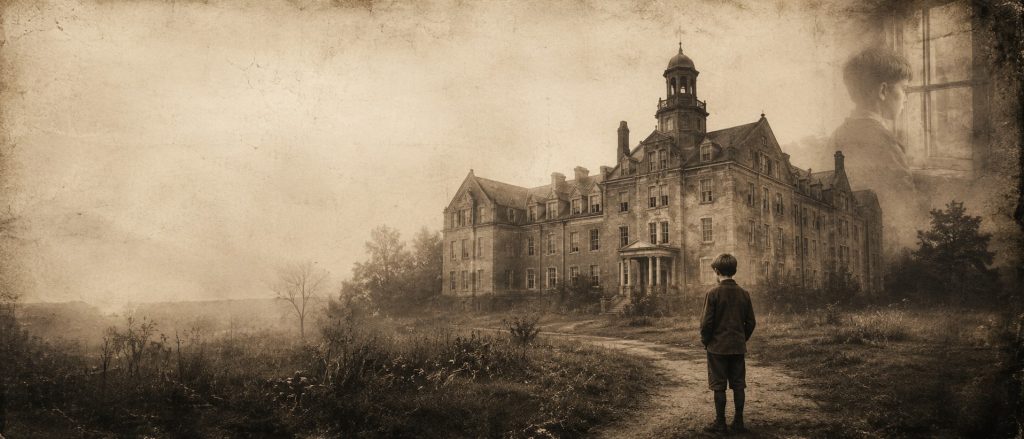
For many people, an old asylum is simply an abandoned building—a weathered reminder of another era. For me, the history behind these institutions is deeply personal.
My father, known as Shorty, spent part of his younger life inside a psychiatric institution. Much of what happened to him was poorly documented, hidden behind institutional walls, or lost over time. The surviving records are incomplete, the explanations are often unclear, and many important questions remain unanswered.
That search for answers eventually became Forgotten Asylums.
I began researching my father’s past because I wanted to understand why he was institutionalized, what he experienced, and how those years affected the rest of his life. As the research expanded, I realized that his story was part of a much larger history.
Across America, countless men, women, and children lived in psychiatric hospitals, state institutions, and asylums. Some remained there for years. Some never returned home. Others were buried in institutional cemeteries beneath numbered markers, their identities and personal histories gradually disappearing from public memory.
Forgotten Asylums exists to help preserve that history.
This project is not intended to romanticize these institutions or reduce their complicated past to a simple story of heroes and villains. Some facilities were created with sincere intentions. Some provided care that families could not obtain elsewhere. Others became places of neglect, isolation, abuse, and lifelong confinement.
The people who entered them came from many different circumstances. Some were experiencing serious emotional distress. Some had physical or developmental disabilities. Others were poor, traumatized, misunderstood, socially inconvenient, or simply considered different from what society accepted at the time.
Their experiences deserve to be examined honestly and remembered with dignity.
Forgotten Asylums will document the institutions themselves—their histories, buildings, cemeteries, photographs, reports, maps, and surviving records. But the deeper purpose of the site is to remember the people who lived within them.
Behind every admission number was a human being. Every patient had a name, a family, a history, and a life that mattered.
My father’s experience remains the emotional beginning of this project, but Forgotten Asylums is intended to grow beyond one family’s story. It will become a place for historical research, personal accounts, forgotten documents, unanswered questions, and the recovery of lives that were too often reduced to files and numbers.
This is both a historical archive and an ongoing search for truth.
The buildings may have been abandoned.
The people should not be forgotten.