
Beatrice State Developmental Center
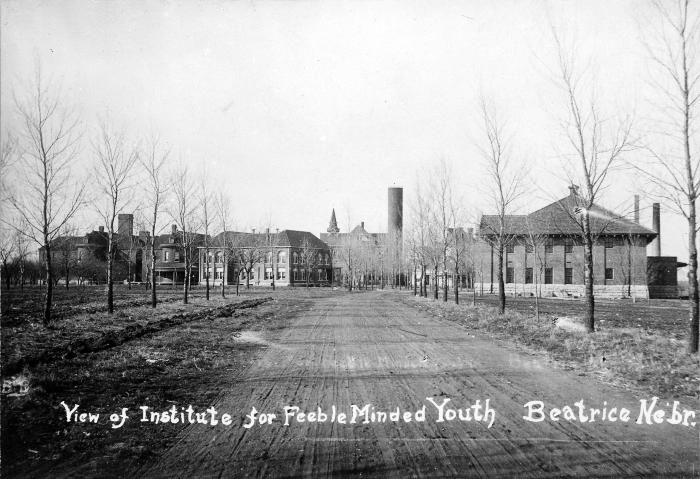
Founded in 1885, the institution now known as the Beatrice State Developmental Center has existed for more than a century under changing names, philosophies, and models of care. Its history is ultimately the history of the thousands of people who lived and worked within its walls.
At a Glance
Founded: March 5, 1885
Original name: State Institution for the Feeble Minded Youth
Location: Beatrice, Nebraska
Peak census: More than 2,200 residents
1921 census: 663 residents
1980s census: Approximately 456 residents
1980s average length of stay: 22.5 years
History of the Institution
This section explains the step-by-step process, helping users understand how to get started and make the most of the product/service.

1885: The Original Mission
Explain the founding legislation and its stated educational/training purpose.

Early 1900s–1960s: The Custodial Era
This is important. The institution’s own history states that by the third decade of the twentieth century, services had become “essentially custodial.” Able-bodied residents worked on the farm, dairy, and elsewhere on campus, in part to reduce the cost of their care.

Late 1960s–1980s: Reform and Transition
Explain the shift toward community-based services, reduced admissions, improved staffing and facilities, and movement from what the document calls a medically oriented custodial model toward a developmental model.
Institutional Timeline
1885 — Institution founded
1921 — Census reaches 663
Mid-1960s — Census exceeds 2,200
1968 — State studies recommend reducing the census and developing community alternatives
1969 — Nebraska Legislature supports development of community-based programs
1972 — Horacek et al. v. Exon et al. filed
1970s — Admissions and census substantially decline
1981 — Court adopts five-year implementation plan
1981 — Center receives JCAH accreditation
1983 — Horacek litigation dismissed
FY1985 — Census approximately 460
There was a particularly dramatic decline from 2,240 residents in FY1967 to approximately 460 in FY1985.
Population & Institutional Growth
As Nebraska increasingly relied on institutional care, Beatrice grew dramatically. Its population rose from 663 residents in 1921 to more than 2,200 by the mid-1960s, reaching 2,240 in 1967. By the mid-1980s, that number had fallen to approximately 460 as admissions declined and Nebraska expanded community-based alternatives to institutionalization.


Campus, Programs & Services
Programming — residential units, education/training, recreation, speech/language services and vocational training.
Medical Services — medical and nursing care, an acute-care facility, dental services, physical and occupational therapy, and various specialties. Beatrice-HisDocs-HistoryOfBSDC-…
Administrative Support — food services, laundry, transportation, security, maintenance and grounds.
Professional Support — psychology, social services, nursing/health-care supervision, staff development and quality assurance. Beatrice-HisDocs-HistoryOfBSDC-…

Legal Challenges & Institutional Reform
The 1972 Horacek class action alleged that Nebraska was failing to provide residents adequate education, treatment and protection from harm. The litigation subsequently became part of the reform process affecting the institution and Nebraska’s broader system of services. Beatrice-HisDocs-HistoryOfBSDC-…
The document says the case was ultimately dismissed in September 1983 following implementation of the state’s court-adopted plan.

Deinstitutionalization & Community Care
The 1968 reports called for a substantial reduction in Beatrice’s census, improvements to the institution, and development of state-supported community programs as alternatives to institutionalization.